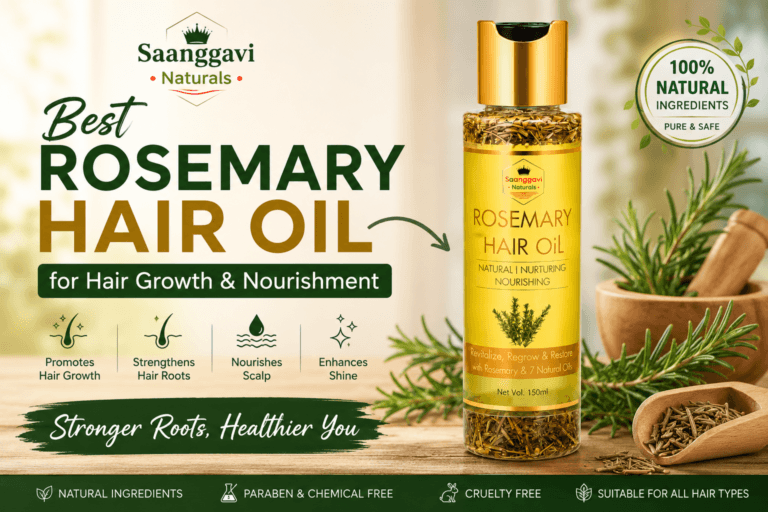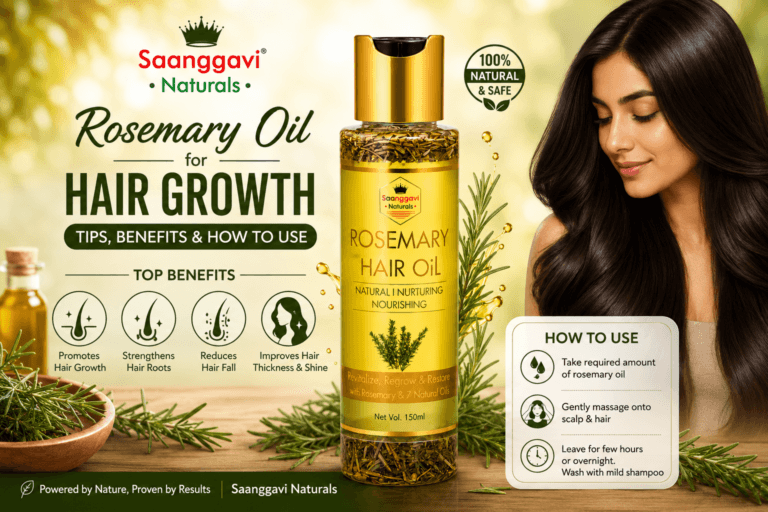
In recent years, rosemary oil has surged in popularity for hair care and for good reason. Rosemary oil is thought to include anti-inflammatory, anti-microbial, and antioxidant compounds that make it a good candidate for hair care. Healthier hair beginnings with a healthy scalp. Some studies have even compared the efficacy of rosemary oil with minoxidil, one of the most popular hair growth serums, with good results for some hair loss issues.
Rosemary Hair Oil for Hair Growth is a great hair care product is because it is natural. With some hair growth products, everyone’s biggest complaint is the irritation and the requirement of a prescription. Rosemary oil can usually be used in conjunction with your hair care products. While it’s not a cure, with regular use, the health of your scalp will improve, and it will foster less breakage.
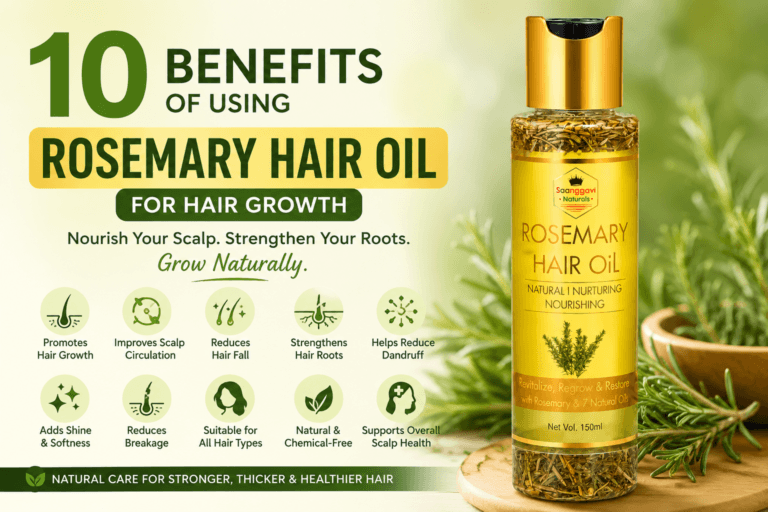
Benefits of Using Rosemary Oil for Hair
- Stimulates blood circulation on the scalp
- Reduces the appearance of thinning hair
- Protect hair follicles with antioxidants
- Increases the health of the scalp
- Decreases flaking on the scalp
- Can be used on almost all hair types
How to Choose the Right Rosemary Oil for Hair Growth
Since there is a broad spectrum of rosemary oils on the market, it’s important to consider quality when buying Rosemary oil for Hair growth. Natural rosemary oil is concentrated; it needs to be diluted when applied to the scalp. Rosemary oil products should advertise that they have rosemary essential oil and avoid products that have a lot of other synthetic ingredients.
Quality rosemary oil needs to have a pleasant and strong herbal smell. Rosemary oil should also be in a dark glass bottle to avoid victimization to sunlight. Because many people use a carrier oil to dilute rosemary oil, you may also find carrier oils being used along with rosemary oil. Carrier oils that are popular are coconut oil, jojoba oil, castor oil, and argan oil. Carrier oils also are a great nourish the hair and scalp.
What to Look For
| Feature | Why It Matters |
|---|---|
| Pure rosemary essential oil | Better potency |
| Dark glass packaging | Preserves quality |
| Organic ingredients | Fewer contaminants |
| Carrier oil blend | Safer application |
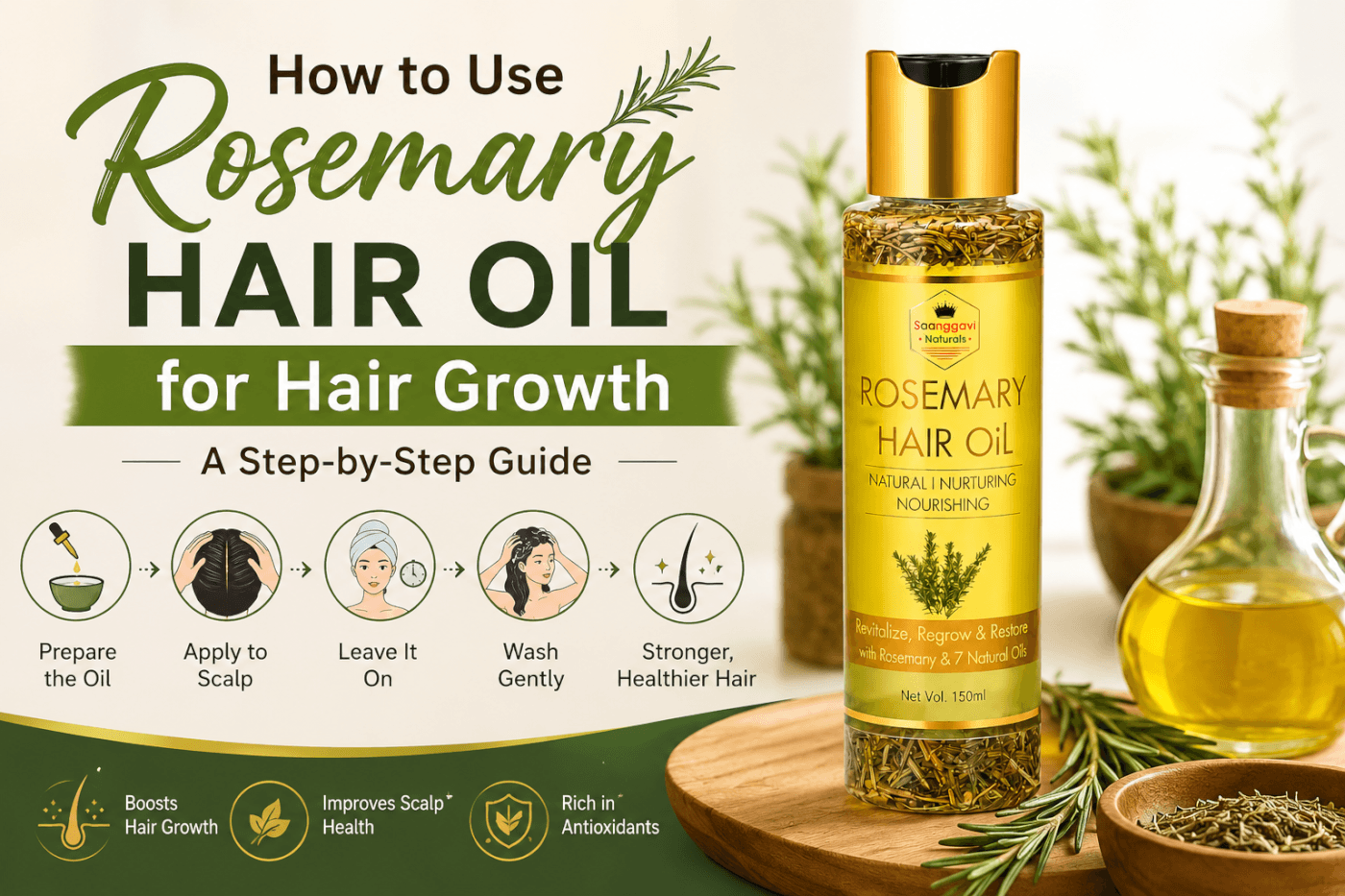
Step 1: Patch Test
It’s a good idea to try a patch test before using Rosemary oil for Hair on your full scalp. This is a critical step since concentrated essential oils can irritate sensitive skin.
Rosemary oil should be diluted before you apply a small amount behind your ear or on your arm. After 24 hours, check for any signs of irritation. If there are no issues, feel free to start applying to your scalp. Starting your hair growth journey should be exciting, and a patch test helps ease the worries by doing it safely.
Patch tests likely won’t show you any issues, but the sensitivity of the scalp can be extremely different than your skin. It’s a good idea to be cautious to lessen the chance of a bad reaction and help you feel more excited to grow your hair.
Step 2: Diluted Rosemary Oil
One of the easiest ways to ruin a scalp is to apply pure rosemary essential oil directly to it. Essential oils must be diluted.
A good rule of thumb for the next time you dilute is:
- 5 drops rosemary essential oil
- 1 teaspoon coconut oil, jojoba oil, or castor oil
- Mix well. Be sure to dilute to avoid the sensitivity rosemary oil may cause.
Step 3: Rosemary Oil on the Scalp
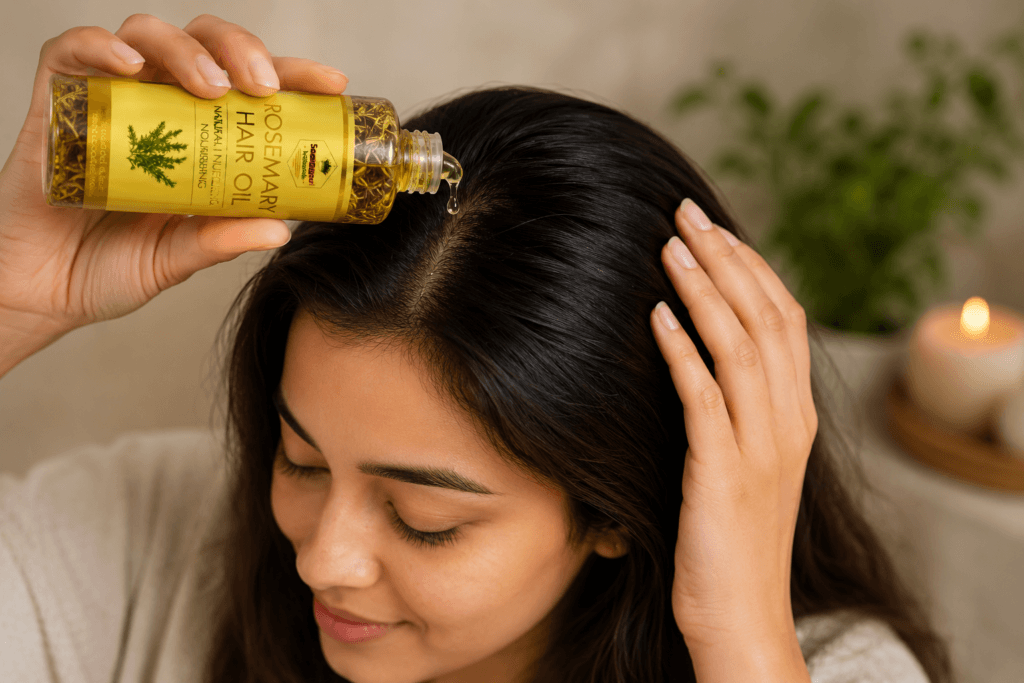
This step is truly the oil step. Part your hair and apply rosemary oil to your scalp. Be sure to avoid your hair while doing this.
Use your fingertips to gently massage the oil into your scalp. Put special emphasis on the areas where you notice thinning the most. Remember that the focus is on the scalp and follicles and not on saturating the hair.
Massaging the scalp can also help the oil distribute deeper as it’s thought to improve blood circulation. Think of it as watering the roots of a plant, not the leaves. The roots are one of the most important factors in the growth of the plant.
Application Suggestions
- Section hair into small portions
- Oil only the scalp
- Use small circular movements
- Do not scratch with your nails
Step 4: Massage for 5-10 Minutes
Scalp massages are always a good time. They allow the oil to spread and circulate.
Use slow circular movements for 5-10 minutes or more. This can easily be a calming self-care routine and seem to improve the effectiveness of the rosemary hair oil.
Many users say this step reduces tension and makes the scalp feel rejuvenated. This step can be done by itself, but in combination with rosemary oil, it’s thought that this step can even help the hair grow.
Step 5: Let the Oil Sit on the Scalp
After you are done with the oil treatment, let the oil sit on the scalp for no less than 30 minutes. It can also be done as an overnight treatment.
If you want to use overnight treatments, use pillow covers to prevent staining. Regular use over long periods has a better chance of resulting in visible improvements compared to long treatments that are done sporadically. Duration of treatment is less important than consistency.
The process of growing hair is naturally slow. Often, success is more a function of consistency and patience than any one particular product.
Step 6: Wash with a Mild Shampoo
At the end of the treatment, wash your hair with a mild shampoo. Using a shampoo that is harsh may strip your scalp of oils and lead to irritation.
Try to use a shampoo that is sulfate-free. This will help reduce the oil on your scalp without drying it out. Be sure to use a conditioner that will help give your hair softness and ease in managing it.
Consistent and balanced hair care will help in developing the conditions that support hair growth, and combined with the treatment of Rosemary oil, will help in the development of healthy hair growth.
Common Mistakes to Avoid
Even the best rosemary oil for hair growth will not give you maximum results when not applied the right way.
- Not Applying the Oil the Right Way
- Applying oil without dilution
- Thinking hair will grow overnight
- Using too much
- Not massaging the scalp
- Applying every so often
- Ignoring scalp irritation
Can You Use Just Rosemary Oil for Hair Loss?
Research is still new and doesn’t provide enough evidence for people to stop traditional hair loss treatments and use rosemary oil as the only solution.
Some types of hair loss may be due to changes in hormones, a lack of nutrients, stress, autoimmune conditions, or even genetics. The best way to find a solution is to see a dermatologist, who may provide one of these options.
Rosemary oil is a good supplement, but if there is significant or sudden hair loss, you should consult a professional.
Other Ways to Help Hair Grow
There are other ways to help hair grow that are not just using hair care products.
- Eat foods with protein
- Make sure your iron levels are good
- Drink lots of waterMaintain a good sleep schedule
- Manage stress
- Minimize heat styling
- Regularly get hair trims
This way of thinking is the same for rosemary oil. If you want good, healthy hair, you need to balance other areas of your life, along with the use of hair care products.
Read This Blog Also- 10 Benefits of Using Rosemary Hair Oil for Hair Growth
Conclusion
With proper application, rosemary oil for hair growth can make an easy and worthwhile addition to your hair care routine. Every step involved in using rosemary oil for hair does something critical, such as choosing the best rosemary oil for hair growth, using the right dilution, the addition of massage, frequency, and even the timing in weeks/months. The results are very individual, but rosemary oil users report benefits for scalp wellness, reduces hair breakage, and improves hair quality and health.
Rosemary oil for hair growth is easy to add to hair care routines done on a weekly basis, and offers an alternative solution for those averse to synthetic products. Like all natural solutions, commitment and realistic expectations are necessary. Health and vitality can take a long time to show, but the long-term benefits may very well strengthen the hair.
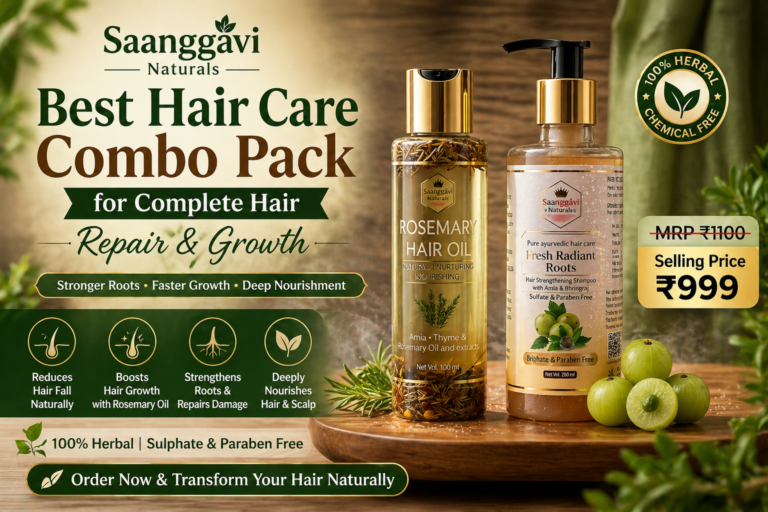
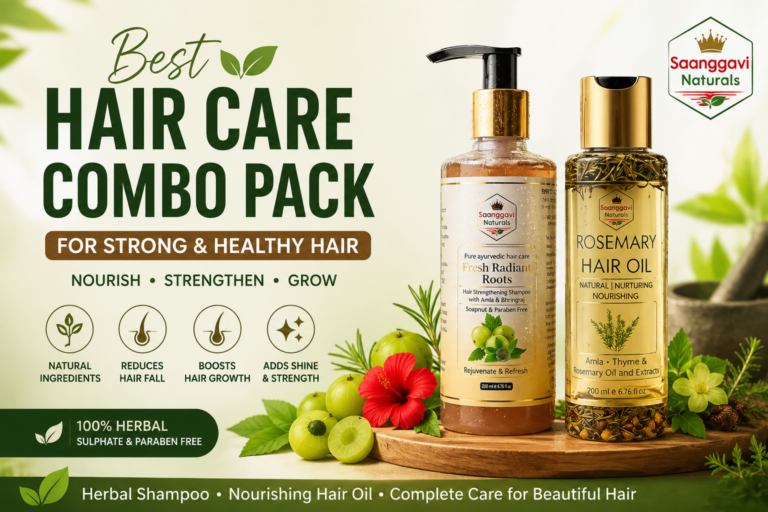
Saanggavi Naturals offers hair care products designed to benefit hair and scalp health and wellness by involving active natural ingredients and using their experience and dedication in the selection to provide the best care.