Standing in front of the bathroom mirror, watching strands stuck to your fingers after every wash it is a moment most Indian men and women know far too well. Pollution climbing higher each year across Delhi, Mumbai, Bengaluru and almost every metro, hard water flowing through our taps, late-night work calls eating into sleep, deadline-driven meals, and supermarket shampoos packed with harsh detergents have quietly turned hairfall into a daily worry rather than a seasonal one. The good news is that switching to a herbal shampoo is no longer just your grandmother’s remedy. It has become one of the smartest hair care decisions you can make this year.
This guide walks you through what actually makes a herbal shampoo work, which ingredients are worth paying attention to, and how to pick the right one for your scalp and hair type.
Why Hairfall Has Become a Daily Worry
Losing 50 to 100 strands every day is considered normal. Anything beyond that, especially when you start noticing thinning patches near the crown or your hairline gradually shifting backward, is your scalp asking for help. Stress hormones like cortisol shrink hair follicles, hard water leaves calcium and magnesium deposits on the scalp, and sulphate-based formulas strip away the natural oils that protect your roots. Add seasonal changes, vitamin D and iron gaps, and the problem multiplies quickly.
A genuine herbal shampoo for hair growth tackles these issues at the root level rather than just cleaning the surface. It works gently, restores the scalp’s natural balance, and slowly rebuilds hair strength over a few weeks of consistent use.
What Makes Herbal Shampoo Different From Regular Ones
Most supermarket shampoos rely on sulphates such as SLS and SLES along with parabens to create that thick, satisfying foam and a long shelf life. The lather feels great but it also dries out the scalp and weakens hair shafts over time. A real herbal shampoo skips these chemicals and depends on plant extracts that Ayurveda has trusted for centuries.
The difference becomes visible within three to four weeks of regular use:
- The scalp feels less itchy and oily by the second day after wash
- Hairfall during shampooing reduces noticeably
- Tiny baby hairs start appearing near the temples and crown
- Strands feel thicker, less brittle, and easier to manage
- The natural shine returns without needing extra serums or conditioners
Key Ingredients to Look For in a Herbal Shampoo for Hair Growth
Not every product labelled “herbal” actually contains enough active botanical content to make a real difference. Many brands sneak in chemicals and add a token quantity of amla or aloe just for the marketing photo on the bottle. Before you pay, flip the bottle and read the ingredient list carefully. The further down the list a herb appears, the smaller its quantity in the formula.
Here is a quick comparison of the most effective herbs and what each one does for your hair:
| Herb | Primary Benefit | Best Suited For |
|---|---|---|
| Amla | Strengthens roots, prevents premature greying | All hair types |
| Bhringraj | Boosts scalp blood flow, supports regrowth | Thinning hair, bald patches |
| Brahmi | Cools the scalp, reduces stress-related shedding | Anxiety-driven hairfall |
| Rosemary | Stimulates follicles, improves density | Slow hair growth |
| Hibiscus | Conditions naturally, controls dandruff | Dry, frizzy hair |
| Reetha | Cleanses gently without stripping oils | Sensitive scalps |
| Shikakai | Adds shine and softness | Damaged or chemically treated hair |
How to Choose the Best Hairfall Control Shampoo
Walking down any supermarket aisle, every second bottle screams “anti-hairfall.” Picking the best hairfall control shampoo needs a slightly sharper eye than that. Focus on three things ingredient transparency, the absence of sulphates and parabens, and whether the brand actually mentions which herbs are inside and in what form.
Avoid products that list “fragrance” or “perfume” near the top of the ingredients, since that label usually masks chemical irritants. Bottles that name exact herbs (rather than vague phrases like “herbal extracts” or “Ayurvedic blend”) tend to be more honest about their formulation.
| What to Check on the Label | Why It Matters |
|---|---|
| Sulphate-free claim | Prevents scalp dryness and breakage |
| Paraben-free formula | Avoids hormone disruption over long-term use |
| Named Ayurvedic herbs | Confirms real botanical content |
| pH between 4.5 and 5.5 | Matches scalp’s natural acidity |
| Cruelty-free certification | Ethical, usually cleaner manufacturing |
| Small-batch production | Fresher product, higher potency |
Best Hair Growth Shampoo for Women: What Actually Works
Female hair concerns often differ from male ones in subtle but important ways. Hormonal shifts during pregnancy, the postpartum months, PCOS, thyroid imbalances, and even monthly cycles can trigger sudden shedding. A good hair growth shampoo for women needs to be gentle enough for daily or alternate-day use, yet strong enough to support follicle health from within.
Women dealing with postpartum hairfall benefit most from formulations rich in Bhringraj and Brahmi, while those struggling with dandruff-led shedding should look for Neem and Tea Tree alongside the usual herbs. One mistake to avoid is switching shampoos every month herbal products need at least six to eight weeks of consistent use before showing meaningful results. Patience is part of the formula.
Common Mistakes That Reduce a Herbal Shampoo’s Effect
Even the best herbal shampoo in your bathroom cannot perform if your hair care habits work against it. Many people give up on natural formulations within two weeks, assuming they “do not lather enough” or “do not feel like shampoo.” That foam-equals-clean idea is exactly what conventional brands trained us to believe.
Watch out for these slip-ups that quietly cancel out the herbs’ work:
- Washing hair with very hot water, which weakens roots and dries the scalp
- Rubbing the scalp aggressively with nails instead of fingertip circles
- Skipping pre-wash oil massage, leaving the scalp under-nourished
- Combing wet hair, which causes maximum breakage
- Using a thick cotton towel that creates friction; switch to a microfibre one
- Tying hair tight while it is still damp
How Often Should You Wash Hair With Herbal Shampoo
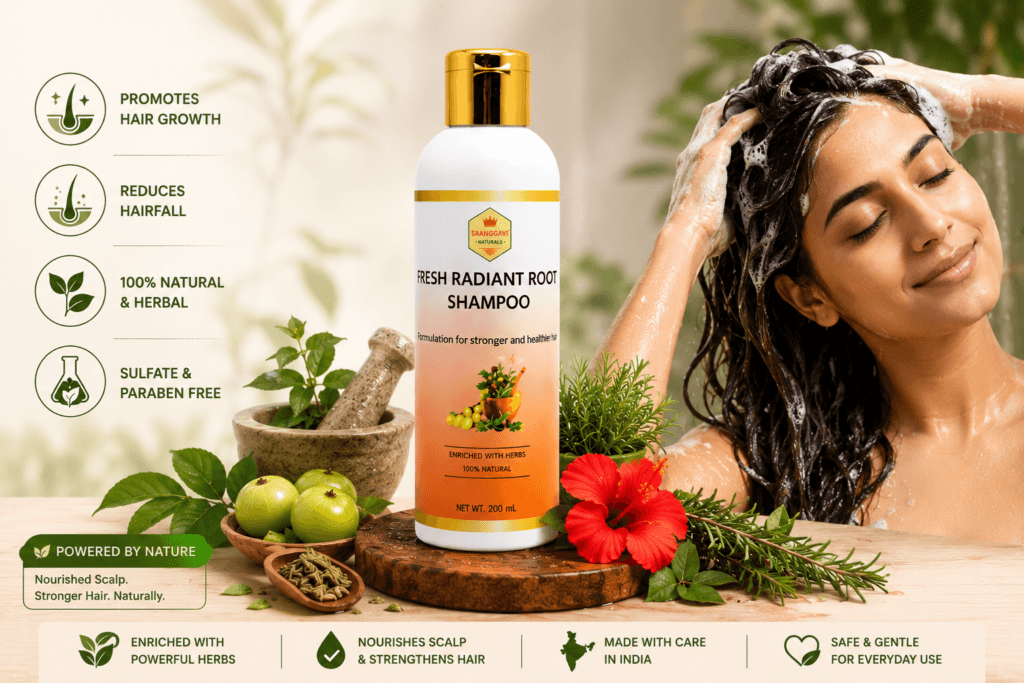
Two to three washes a week is the sweet spot for most Indian hair types. Daily washing, even with a mild herbal shampoo, can disturb the scalp’s natural oil cycle and leave hair feeling unusually dry. If you exercise daily or live in a high-pollution city, a quick rinse with plain water on non-shampoo days works well to remove sweat and dust without stripping anything.
Before each wash, warm a little hair oil between your palms and massage for five to ten minutes. This loosens dirt buildup, improves circulation, and prepares the scalp to absorb the shampoo’s active ingredients more effectively.
Read This Blog Also- Best Rosemary Hair Oil for Hair Growth & Nourishment
Final Word
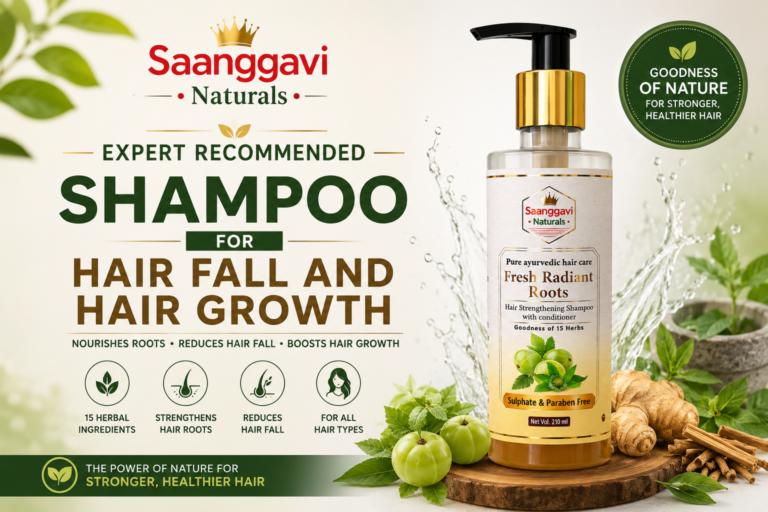
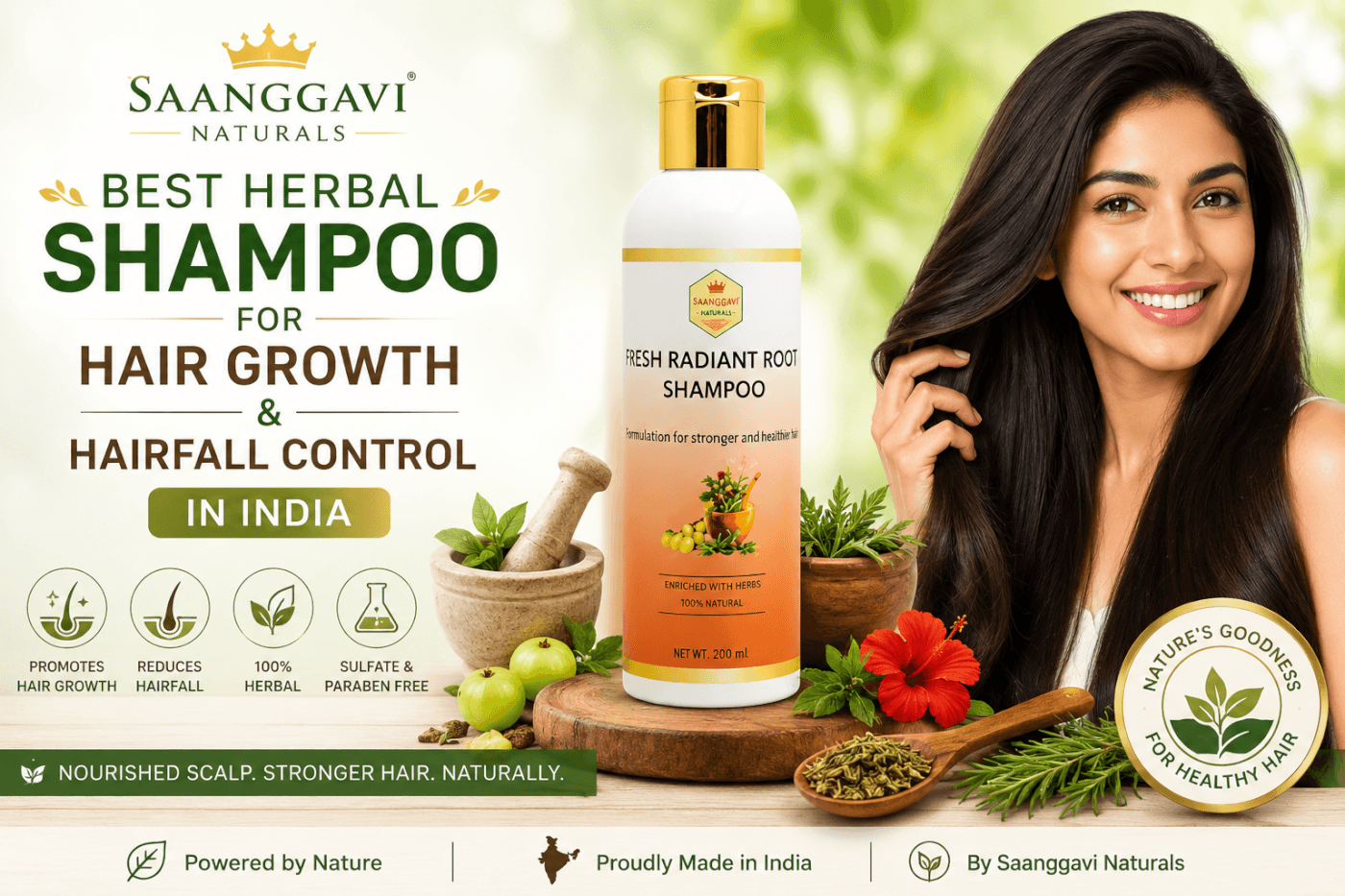
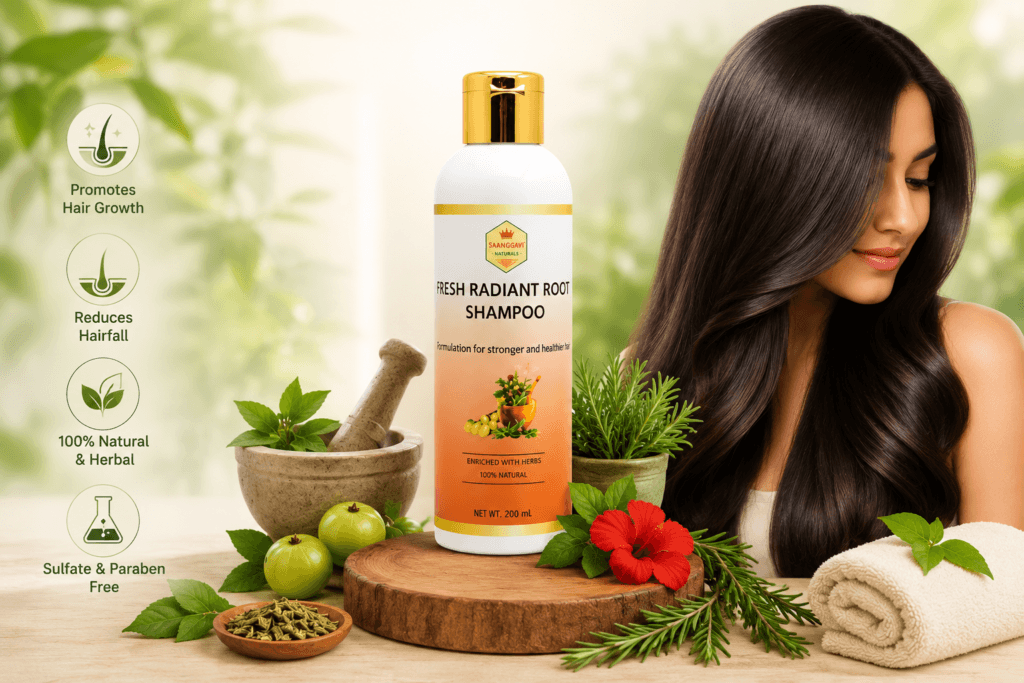
When it comes to picking a brand that genuinely respects Ayurvedic tradition rather than borrowing its vocabulary for marketing, Saanggavi Naturals has been quietly winning trust across Indian households. Their Fresh Radiant Roots Herbal Shampoo brings together 15 carefully chosen herbs including Amla, Bhringraj, Brahmi, Rosemary, and Hibiscus, and stays completely free of sulphates and parabens. The brand believes in small-batch production, focuses on real herbal concentrations instead of token sprinkles for the label, and offers products suitable for every hair type men, women, oily scalps, dry ends, and everything in between.
If you have been searching for a herbal shampoo that actually delivers on its promises without weighing your wallet down, Saanggavi Naturals deserves a place on your bathroom shelf.