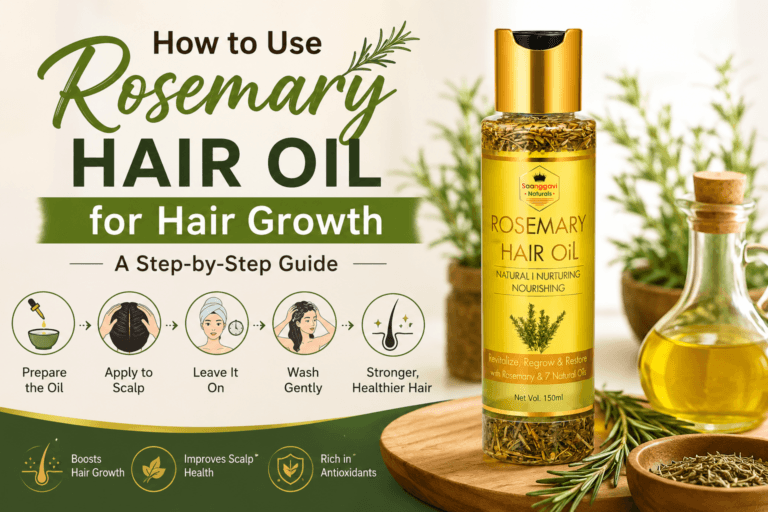
Walk into any beauty aisle or scroll TikTok for five minutes, and you’ll spot it almost everywhere a small amber bottle of Rosemary oil for Hair growth, sitting beside testimonials from people swearing it pulled their hair back from the brink. The buzz isn’t manufactured. A 2015 clinical trial published in SKINMED compared rosemary essential oil against minoxidil 2% for six months and found comparable hair regrowth results, with fewer side effects like scalp itching.
That kind of evidence is why this humble herb-derived oil has shifted from being a kitchen-garden curiosity to a serious hair care ingredient. But here’s the part nobody really tells you splashing it directly onto your scalp the way the videos suggest can absolutely backfire. Burning sensation, redness, sometimes even more shedding. Most “rosemary oil failed me” stories trace back to wrong usage, not weak oil.
Let’s break down the actual right way to use Rosemary oil for Hair growth, the methods that genuinely deliver, and what to look for when you’re buying your next bottle.
Why Rosemary Oil Earned Its Spot in Hair Care
Rosemary oil for Hair growth contains carnosic acid, rosmarinic acid, and 1,8-cineole compounds studied for their ability to improve scalp circulation and calm inflammation around hair follicles. Better blood flow means follicles receive more oxygen and nutrients, which is foundational for hair to grow thicker and stay rooted longer. It also carries antimicrobial properties, useful when dandruff or fungal build-up is suffocating the scalp environment.
Proven Benefits of Rosemary Oil for Hair
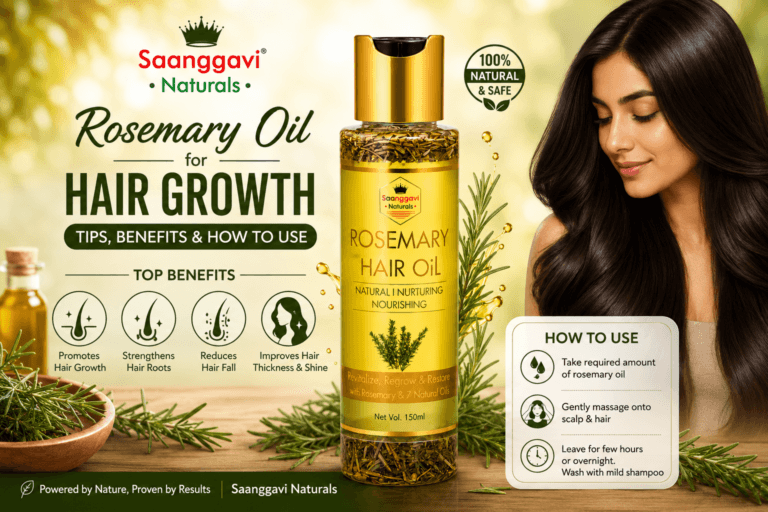
Before getting into application methods, it helps to know what you’re actually working toward when you commit to this oil:
- Encourages new growth by stimulating dormant follicles
- Slows hair fall driven by hormonal imbalance and DHT sensitivity
- Reduces dandruff, flaking, and scalp irritation
- Adds natural shine and softness to dry, brittle strands
- May help delay premature greying (widely reported, less clinically confirmed)
- Improves overall scalp circulation when massaged in properly
The Right Way to Use Rosemary Oil for Hair
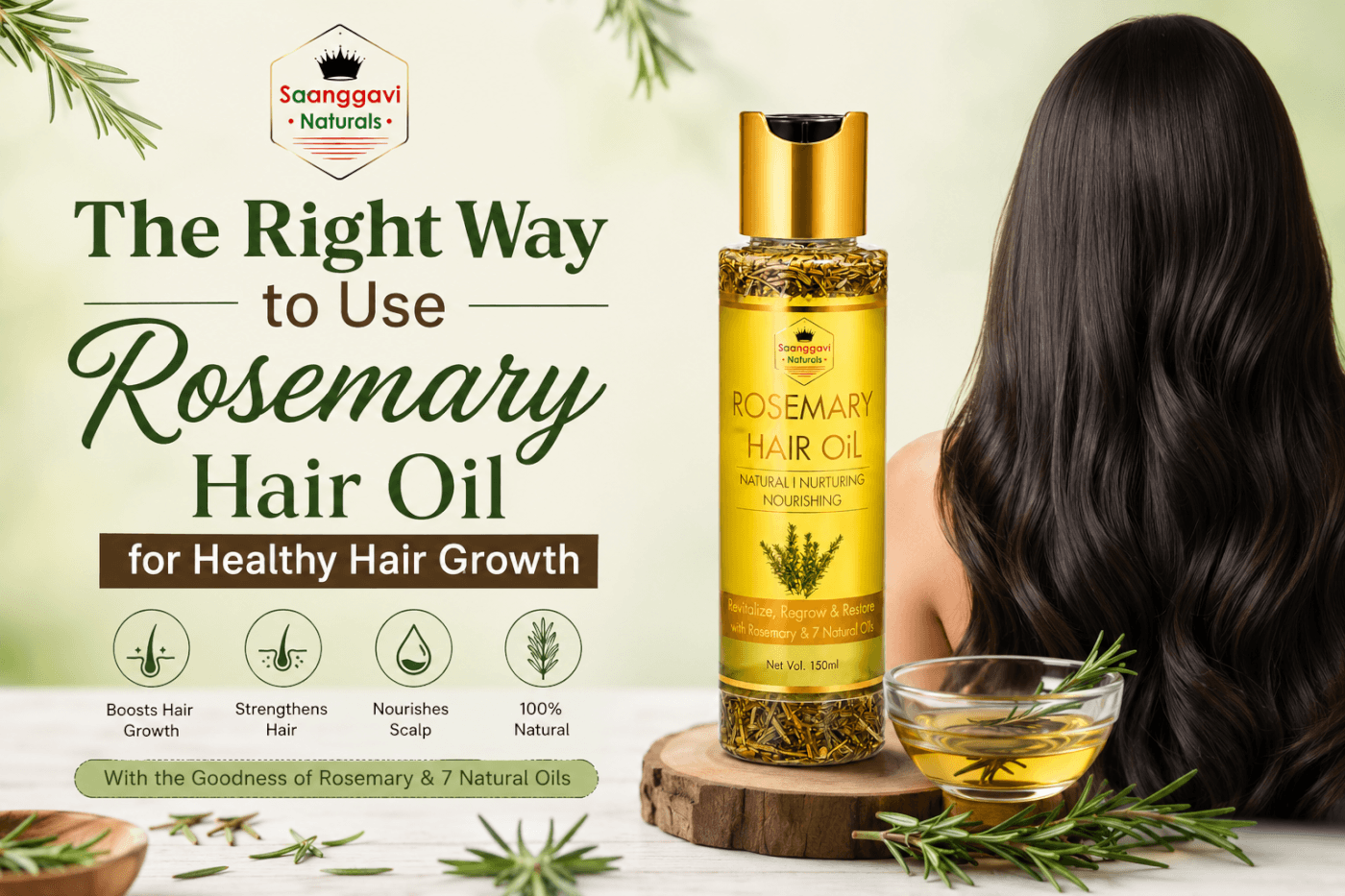
This is where most people slip up. Essential Rosemary oil is extremely concentrated using it neat is almost always a mistake. Here are five methods that actually work.
1. Always Dilute With a Carrier Oil
Pure rosemary essential oil should never touch your scalp on its own. Blend 4 to 5 drops into one tablespoon of a carrier oil — coconut for deep moisture, jojoba for sebum balance, almond for nourishment, or argan for shine. Each carrier adds its own layer of benefit. If you’re using a pre-formulated Rosemary oil for Hair product where dilution is already done, you can skip this step entirely.
2. The Scalp Massage Technique
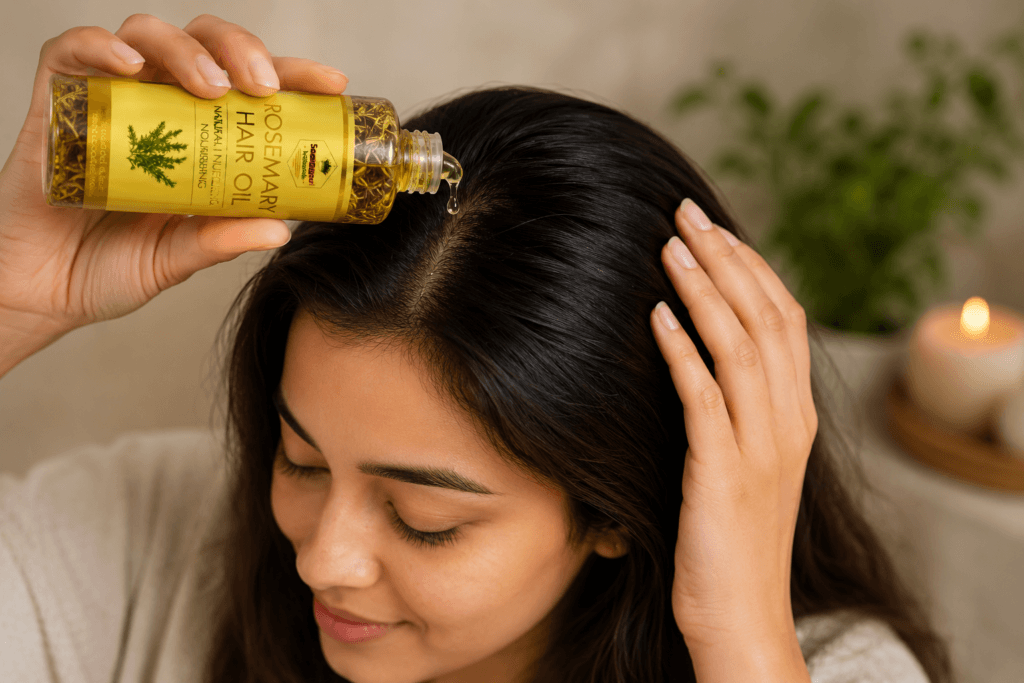
Application matters as much as the oil itself. Section your hair, dip your fingertips into the diluted blend, and press in slow circular motions across the scalp for at least 5 to 7 minutes. The massage isn’t just about spreading the oil it physically stimulates blood flow, which is half the reason rosemary works in the first place.
3. Pre-Wash Hot Oil Treatment
Warm the diluted oil slightly comfortably warm, never hot and apply 30 to 45 minutes before shampooing. Wrap your head in a warm towel or shower cap. The mild heat helps active compounds penetrate the follicle bed far more effectively than cold application.
4. Mix Into Shampoo or Conditioner
For people who can’t commit to long oiling sessions, add 2 to 3 drops of rosemary essential oil into a single use of shampoo or conditioner in your palm. It won’t be as intensive as a full treatment, but consistency beats intensity in hair care — almost always.
5. Light Leave-In Serum
A very light dilution (1 drop in 1 teaspoon of jojoba oil) can be smoothed onto damp mid-lengths and ends after washing. This is more for shine and frizz control than active growth, but it’s a clean way to keep rosemary in your daily routine without weighing the hair down.
How Often Should You Use It?
Frequency depends entirely on your scalp type. More is not better — over-oiling clogs follicles and can worsen the very shedding you’re trying to fix.
| Scalp Type | Recommended Frequency | Best Method |
|---|---|---|
| Dry / Normal | 3 times a week | Pre-wash hot oil massage |
| Oily | 1 to 2 times a week | Diluted scalp massage only |
| Sensitive | Once a week | Very light dilution, patch test first |
| Dandruff-prone | 2 times a week | Pre-wash with a tea tree blend |
Mistakes That Sabotage Your Results
Even the best Rosemary oil for Hair won’t deliver if you fall into these traps:
- Applying undiluted essential oil directly to the scalp
- Skipping the patch test (rosemary can trigger contact dermatitis in some users)
- Expecting visible change in 2 weeks — real growth shows after 8 to 12 weeks of consistent use
- Using it during pregnancy without doctor approval
- Never washing it out properly, leaving residue that blocks follicles
- Mixing it with too many other essential oils at once
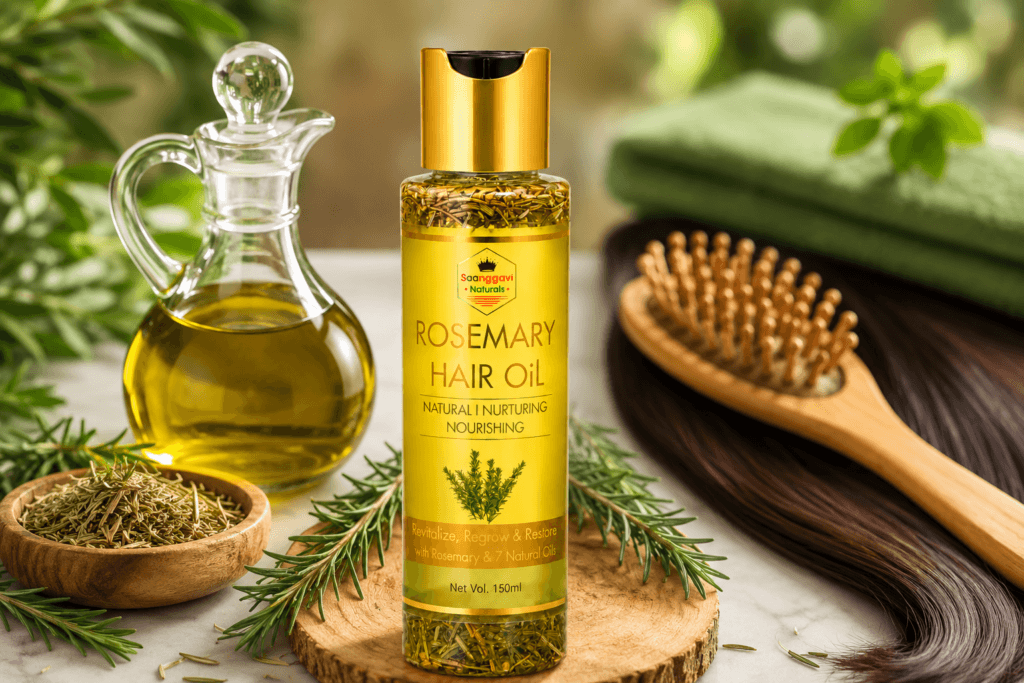
Rosemary Oil vs Other Popular Hair Oils
Knowing where rosemary stands against the other oils competing for your shelf space helps you decide what to combine, what to alternate, and what to skip.
| Oil Type | Best For | Key Strength | Limitation |
|---|---|---|---|
| Rosemary Oil | Growth, scalp health | Stimulates follicles, reduces DHT | Must be diluted |
| Castor Oil | Thickness, edges | Rich in ricinoleic acid | Heavy, hard to wash out |
| Coconut Oil | Moisture, breakage | Penetrates the hair shaft | Can clog scalp pores |
| Argan Oil | Shine, frizz control | Vitamin E, antioxidants | Doesn’t drive growth |
| Bhringraj Oil | Premature greying | Ayurvedic, calming | Slower visible results |
Choosing the Best Rosemary Oil for Hair
Not every bottle on the shelf earns your scalp’s trust. When picking the best Rosemary oil for Hair, these markers separate a real product from a diluted, oxidised one sitting on a warehouse shelf for a year:
- Steam-distilled, never solvent-extracted
- Packaged in dark amber or cobalt glass (light degrades the active compounds)
- Lists the botanical name Rosmarinus officinalis clearly on the label
- Free from mineral oil, silicones, and synthetic fragrance
- Carries a visible batch number and expiry date
Trustworthy brands also mention the source country — Morocco, Tunisia, and Spain produce some of the most aromatic, potent rosemary in the world — and serious ones will share GC-MS purity reports on request.
Read This Blog Also- 5 Best Herbal Shampoos for Hair Growth 2026
A Final Word
Healthy hair growth isn’t a 30-day sprint — it’s a quiet, consistent practice of giving your scalp exactly what it asks for. Used the right way, rosemary becomes one of the most dependable additions to your routine, supporting follicle strength without the harsh trade-offs of chemical treatments.
If you’re looking for a clean, thoughtfully formulated option grounded in traditional Indian botanical wisdom, Saanggavi Naturals crafts herbal hair care blends made for people who prefer slow, scalp-honest results over quick fixes — the kind of routine your hair will still thank you for a year from now.